"Max and Oli are the dream team! From quote to installation was seamless. No dodgy sales pitch, the price was reasonable and nothing was too much trouble. Would highly recommend for anyone in East Anglia."
MCS Certified · One Local Installer · Norfolk
Solar Panels Norfolk
One Trusted Local Installer — No Comparison Sites
Your enquiry goes to one MCS-certified Norfolk installer. No multiple quotes. No sales pressure. No spam calls.
MCS certified local installer
No comparison sites or lead selling
Free, no-obligation estimate
Typical install time: 1–2 days
Get Your Free Solar Quote
Your enquiry goes to one trusted Norfolk installer — no comparison sites, no spam calls.
Enquiry Received!
Thank you. Square1 Installations will be in touch shortly with your free solar estimate.
🔒 Your enquiry goes directly to Square1 Installations Ltd only. MCS certified, Norwich-based.
Your enquiry goes to Square1 Installations Ltd (Norwich-based, MCS certified installer)
Our verified partner for Norfolk
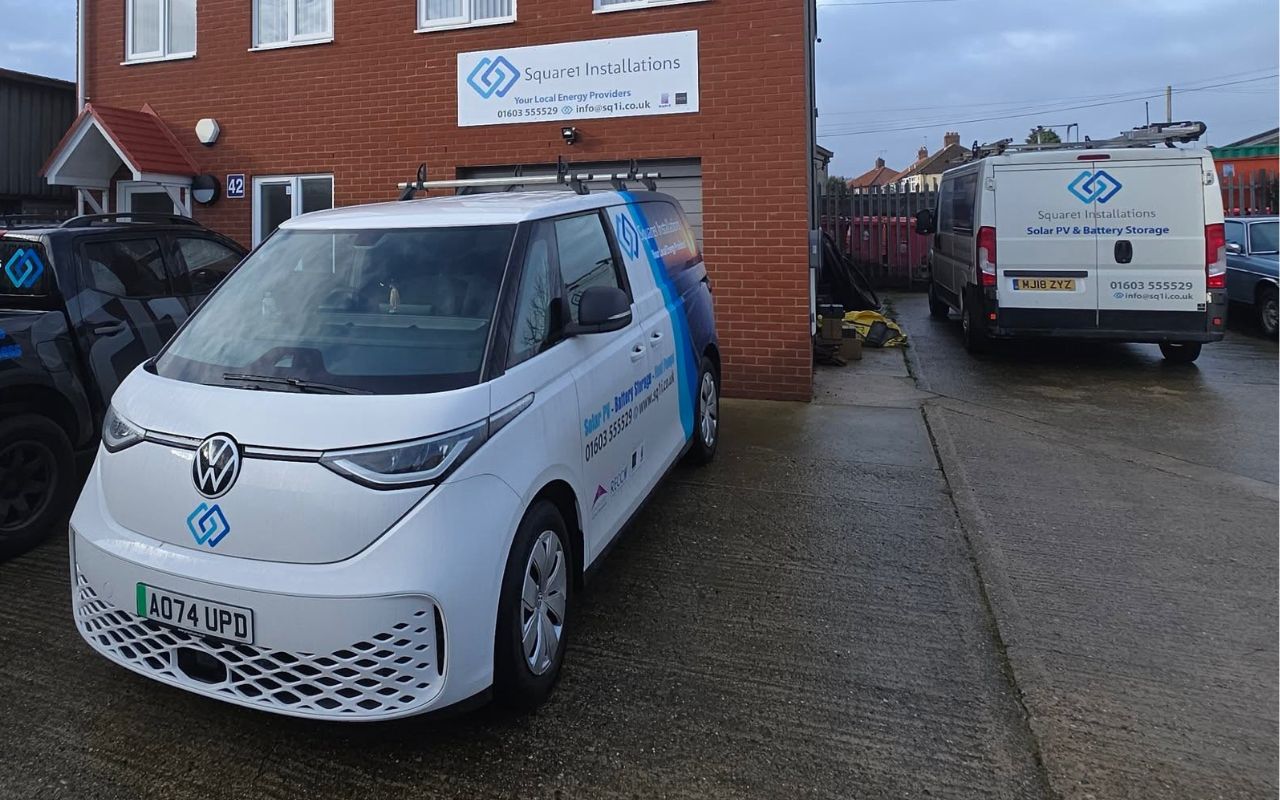
Square1 Installations Ltd is the installer behind norfolk.solar
We only partner with one installer per region — and only after they've met our standards for MCS certification, customer reviews, and local reputation. Every enquiry you submit goes directly to their team. No sharing. No middlemen.

Square1 Installations Ltd
5★
Google rating
1–2
Days to install
25yr
Panel warranty
MCS
NAP/66667/22/1
MCS Certified installer
0% VAT on all residential installs
Free no-obligation survey included
Smart Export Guarantee registered
Your enquiry goes to them only
Real customers
What Norfolk homeowners
are saying
"First class service from first contact to installation. Max never failed to answer every question professionally and promptly. Flawless level of service from the entire Square1 team."
"Spot on service. Transparent conversation and hassle free installation. The team were all good guys, worked super quick and I did not need to tidy anything after they left. 5 stars all day long."
Ready to see what solar could save you?
Takes 30 seconds. One trusted Norfolk installer. No comparison sites, no spam calls.
See Your Instant Solar Estimate →🔒 Your enquiry goes to Square1 Installations Ltd only. Norwich-based, MCS certified.
The process
From enquiry to installation
in 3 simple steps
1
Free roof survey
A local MCS-certified surveyor visits your Norfolk property, assesses your roof, orientation and shading, and designs the right system for your usage.
2
No-obligation quote
You receive a detailed quote with system size, estimated annual saving, payback period and finance options. No pressure, no time limits.
3
Installation in 1–2 days
Your system is installed by our local Norfolk team. Grid connection notified, SEG registration handled, generating electricity the same day.
Why Norfolk?
Is solar worth it in Norfolk?
Solar panels are a strong investment for Norfolk homeowners in 2026. Norfolk homeowners are increasingly turning to solar as energy bills remain high and the technology continues to improve.
The average Norfolk household currently spends over £2,000 per year on electricity. A properly sized 4kW solar system can offset 30–50% of that usage, saving between £600 and £1,100 annually. Add battery storage and that figure rises significantly, as surplus daytime generation is stored for evening use rather than exported to the grid at low rates.
The UK government's Smart Export Guarantee (SEG) means you are paid for every unit of surplus electricity you export. Combined with 0% VAT on residential solar installations, the financial case for solar in Norfolk has never been stronger. Most systems reach payback within 7–9 years and carry a 25-year panel performance warranty.
£900
Average annual saving for Norfolk homeowners
7–9yr
Typical payback period in the UK
0%
VAT on all UK residential solar
25yr
Standard panel performance warranty
Free Savings Calculator
How much could solar save
you in Norfolk?
Enter your details below for an instant personalised estimate. No sign-up needed.
£50/mo£500/mo
£630–£810
Estimated annual saving
7–9 yrs
Typical payback period
3–4 kW
Recommended system size
Estimates based on UK averages. Your exact saving confirmed in a free survey.
Common questions
Solar panels in Norfolk —
your questions answered
A typical 4kW solar panel system in Norfolk costs between £5,000 and £8,000 installed by an MCS-certified installer. Prices vary based on roof type, system size and battery storage. 0% VAT applies to all residential solar installations in the UK.
Most Norfolk homeowners save between £600 and £1,100 per year on electricity bills after installing solar panels. Savings depend on your current usage, system size and whether you add battery storage. The average payback period is 7–9 years.
Yes. Solar panels work on daylight, not direct sunshine, so they generate electricity year-round in Norfolk. Modern panels are highly efficient even on cloudy days. UK solar systems typically generate 850–950 kWh per kWp installed annually.
In most cases, no. Solar panels on domestic properties in Norfolk are considered permitted development and do not require planning permission, as long as panels do not protrude more than 200mm from the roof and the property is not in a conservation area.
MCS (Microgeneration Certification Scheme) is the UK quality standard for small-scale renewable energy. Only MCS-certified installers can issue the certificates needed to claim Smart Export Guarantee (SEG) payments, which pay you for surplus electricity exported to the grid.
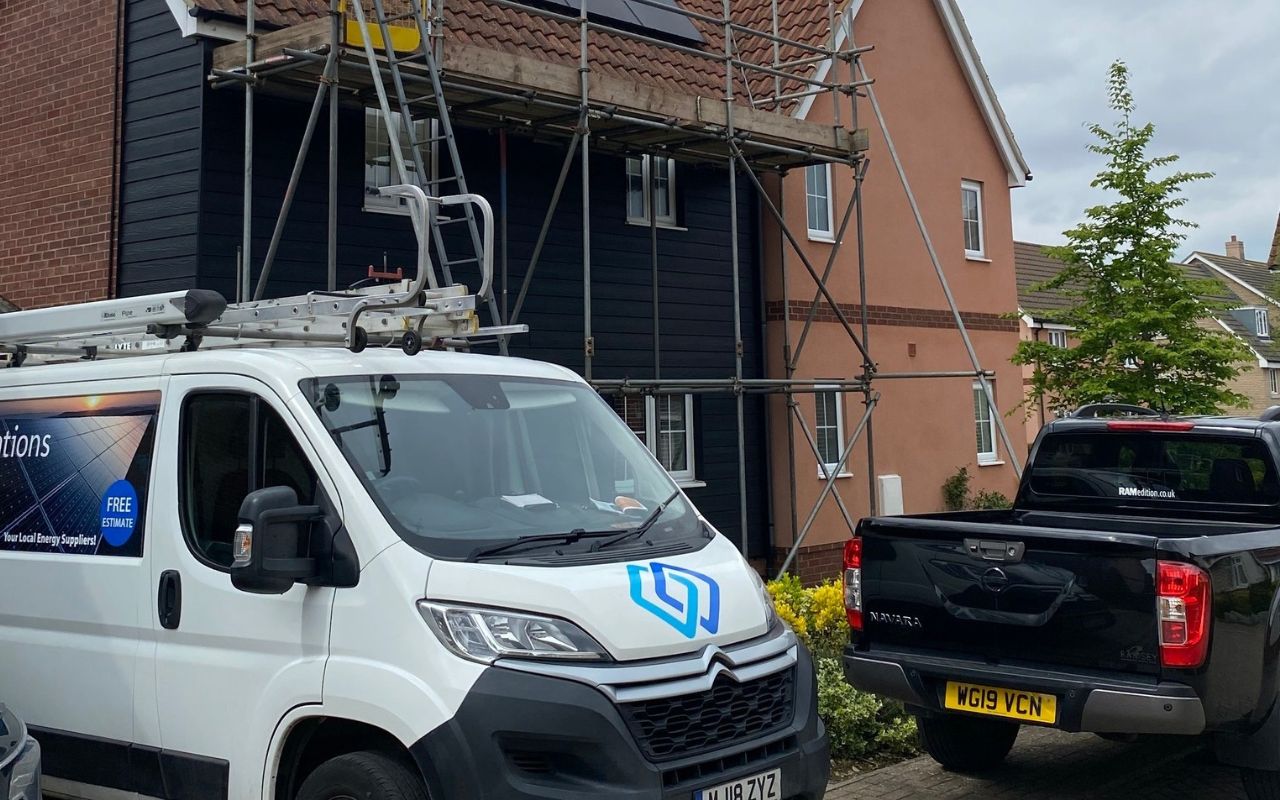
Most residential solar installations in Norfolk take 1–2 days from survey to completion. The process includes a free roof survey, system design, installation and grid connection notification. Scaffolding is usually removed the same day.
No. The UK government removed VAT on residential solar panel installations in 2022. You pay 0% VAT on both the panels and the installation cost. This applies to all homeowners across England, Scotland and Wales.
The Smart Export Guarantee (SEG) is a UK government scheme that pays you for surplus solar electricity exported to the national grid. Rates vary by energy supplier but typically range from 3p to 15p per kWh. You must use an MCS-certified installer to be eligible.
Ready to go solar
in Norfolk?
One trusted local installer. Free no-obligation estimate. Takes 30 seconds.